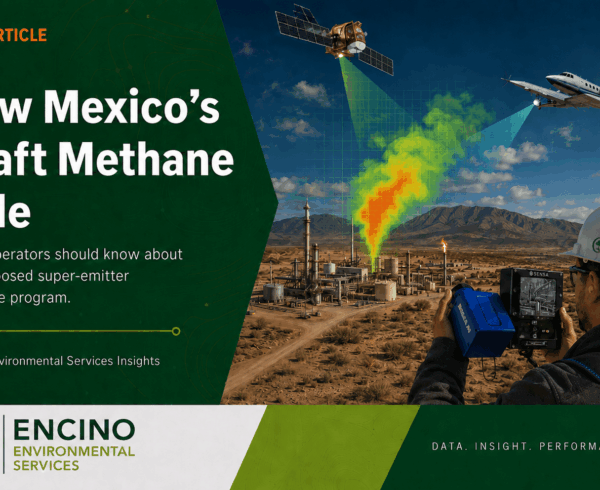
Understanding the role of satellite-based methane emissions monitoring from space has taken on new importance in the wake of the Environmental Protection Agency’s (EPA) inclusion of the Super-Emitter Response Program (SERP) in the agency’s comprehensive new rule, 40 CFR Part 60 Subpart OOOOb. One of the more controversial aspects of the Super-Emitter Response Program is its authorization of third parties, previously vetted and approved by the EPA, to monitor and notify the agency of a super-emitter event. Under OOOOb, the EPA defines super-emitter events as those having a quantified emission rate of 100 kilogram per hour (kg/hr) of methane or greater.
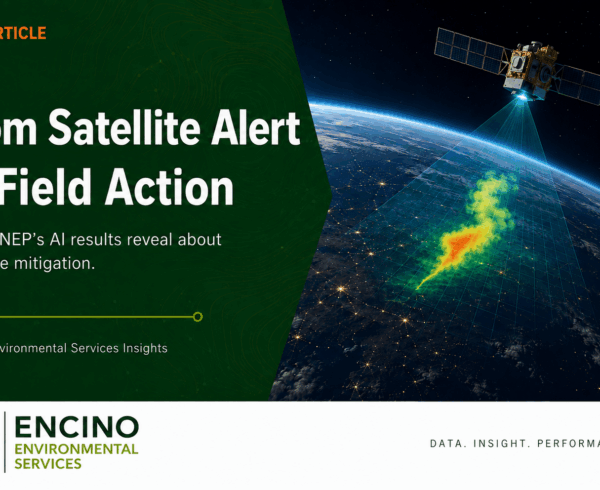
Satellite-based monitoring has emerged as a powerful tool for detecting super-emitter events, offering global coverage and high-resolution data that are essential for understanding and addressing methane emissions. Leading operators are already using satellite monitoring as an early warning system and proactive defense against activist claims.
READ MORE: Understanding the Super Emitter Response Program: A Proactive Approach to Emissions Management
Beginnings of Satellite Methane Monitoring
The journey began with Japan’s Greenhouse Gases Observing Satellite (GOSAT) in 2009. GOSAT, launched by the Japan Aerospace Exploration Agency (JAXA), marked a significant step in measuring greenhouse gases, including methane, on a large scale from space. Since then, SPACEX’s capability enabled the deployment of multiple smaller satellite missions.
Rationale for Satellite Methane Monitoring
The EPA cited the 2016 study by Brandt as one of the main studies that led to its rationale for using satellites to monitor methane and the SERP. The EPA noted the study’s hypothesis that the top five percent of emissions sources contribute over 50 percent of total emissions from the Oil & Gas industry. The agency hopes that SERP will help detect more super-emitter events sooner, so they can be stopped quickly and limit the release of methane into the atmosphere.
Satellite methane monitoring addresses critical challenges in emissions management by offering:
- High Spatial Resolution. Capable of detecting methane hotspots over vast and often inaccessible regions, such as remote oil and gas fields.
- Source Identification. Can detect emissions from natural sources (e.g., wetlands), which become part of the background methane concentration and provide further context for analyzing methane emissions from human activities such as fossil fuel extraction, agriculture, and waste management, providing invaluable insights into emission sources.
- Long-term Trends Analysis. By continuously monitoring methane concentrations over time, satellites enable scientists to track emission trends and evaluate the effectiveness of mitigation efforts.
Current Issues in Satellite Methane Monitoring
Despite advancements, several challenges persist in satellite methane monitoring:
- Resolution and Coverage. Balancing high spatial resolution with comprehensive coverage remains a technological hurdle. Achieving detailed observations over large areas while maintaining accuracy for small, dispersed emissions sources is an ongoing challenge.
- Sensitivity and Detection Limits. Improving sensor sensitivity is crucial to reducing false positives and accurately quantifying methane concentrations, especially in complex atmospheric conditions.
- Reconciliation (Validation and Calibration). Ground-based validation and calibration are essential to ensure the accuracy of satellite measurements, bridging the gap between remote sensing data and ground truth measurements.
- Temporal Resolution. The frequency of satellite data updates can affect the ability to capture rapid changes in methane emissions, making revisitation time an important factor. Increasing the number of satellites as part of the mission can significantly reduce the duration between visits, improving data timeliness and accuracy.
Additionally, advanced capabilities like the EmSat™ Agility feature provide pointing accuracy, allowing the capture of high-quality images continuously while the satellite observes along and across its orbit, following non-linear structures on Earth. This allows EmSat to take high-resolution images of pipelines and other infrastructure, keeping the target at the center of the image frame
The EmSat system offers 13-meter pixel resolution in the designated methane band, which is among the best currently available.
Data Access and Collaboration. Access to satellite methane data can be limited due to data sharing policies, costs associated with high-resolution data, and technical barriers in data processing and interpretation.
Technological Advancements. Continued research and development are essential to enhancing satellite sensor technologies, refining data processing algorithms, and improving modeling capabilities for more accurate methane monitoring.
Risks to Oil and Gas Operators
The Super Emitter Response Program presents Oil and Gas operators with several risks:
Regulatory Compliance. Compliance with regulations like the Super Emitter Response Program under OOOOb requires proactive methane monitoring to avoid fines and regulatory scrutiny.
READ MORE: Super-Emitter Response Program § 60.5371 What standards apply to super-emitter events?
Fines. Non-compliance may result in fines and additional costs, impacting operational efficiency and corporate reputation. A new financial risk is the which is poised to go into effect in 2025 for 2024 emissions. Methane emissions in excess of a specified limit are charged at the rate of $900 per metric ton of methane and the rate is set to increase in 2026 and 2027.
READ MORE: Navigating the EPA’s Waste Emissions Charge (WEC): How to Reduce Costs & Stay Compliant
Damage to Corporate Reputation. Being labeled a single or habitual super-emitter has the potential to invite greater regulatory scrutiny and tarnish your reputation with the investment community, who increasingly take environmental performance into account when screening investment alternatives and assessing risk.
Loss of Product. Detecting and mitigating methane leaks promptly can prevent operational disruptions and loss of methane products, converting what could have been fugitive emissions into additional revenue streams.
Competitive Disadvantage. Being identified as a constant super-emitter can create a competitive disadvantage. For example, in 2020 the French power company Engie backed out of a deal with U.S. LNG supplier NextDecade after it decided it did not want to purchase gas wells it considered emissions risks to the environment.
The Solution – Move to Proactive from Reactive
When it comes to the Super Emitter Response Program, the best defense against spurious claims and scrutiny is a proactive offense. Encino Environmental Services offers Oil and Gas operators an effective and proactive defense with our EmSat satellite methane detection system.
The EmSat advanced satellite methane detection system provides:
A Proactive Defense. Gain awareness of a super-emitter event and other significant leaks before a third-party submits a report to the EPA and generates a notification. Minimize the impact of any event and have the data to disprove any false reports.
Comprehensive Monitoring for Early Warning. Cost-effective monitoring of entire fields and infrastructure, including hard-to-reach operations like offshore platforms, ensuring early detection of methane emissions.
Optimized Deployment. Enables efficient deployment of Leak Detection and Repair (LDAR) crews to areas with the highest impact, minimizing false positives and maximizing emission reductions.
Integrated Solutions. Combined with EmVision™ Continuous Emissions Monitoring System (CEMS), EmSat delivers comprehensive, verifiable data for precise emissions management and compliance with regulatory requirements.
OGMP 2.0 Certification. Satellite methane monitoring can be used to meet OGMP 2.0 Level 5 purposes.
READ MORE: EmSat Satellite Methane Detection System from Encino Environmental
The Encino Advantage
Encino offers the most comprehensive lineup of environmental performance solutions, services, and expertise for mitigating emissions from Energy operations with a focus on Oil & Gas and Biogas markets. We are a pioneer in emissions monitoring in the Energy sector, providing clients with a complete range of environmental services to help companies comply with regulation requirements and voluntary sustainability objectives.
Our offerings include:
- CEMS (Continuous Emissions Monitoring Systems) via artificial intelligence (AI)-enabled Optical Gas Imaging (OGI)
- Satellite Monitoring for Methane and Visual applications via Satlantis micro satellites (EmSat™)
- Emissions performance testing for Engines, Combustors, and Industrial Stacks
- LDAR (Leak Detection and Repair)
- Composite Thief Hatches (Enviromech™) composite thief hatches for a durable, long-term seal of liquid storage tanks
- Advanced environmental data software
Our solutions help ensure regulatory compliance and ESG strategies and objectives. Encino operates across the U.S. covering all major oil and gas basins and select international markets.
We view ourselves as an oilfield services company, dedicated to helping operators improve their environmental and economic sustainability for providing the world with reliable and affordable energy.
The Enviromech Composite Thief Hatch can help you mitigate the risk of tank battery emissions resulting from faulty, malfunctioning, and aging thief hatches, and reduce operating costs.
Contact us today for a free consultation and evaluation of how Encino can help you achieve environmental performance that generates economic results.