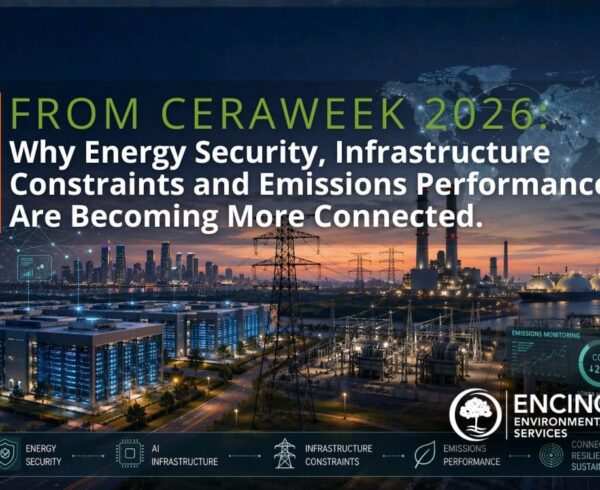
What the AI infrastructure surge signals for power, permitting, and emissions
The next wave of data center development is not just a technology story. It is increasingly a power infrastructure story.
For developers and operators, that changes the conversation in a meaningful way. Reliable generation is only part of the equation. As projects scale, teams also need a plan for air permitting, emissions performance testing, ongoing monitoring, and compliance strategy for backup engines, microgrids, turbines, and other on-site power assets.
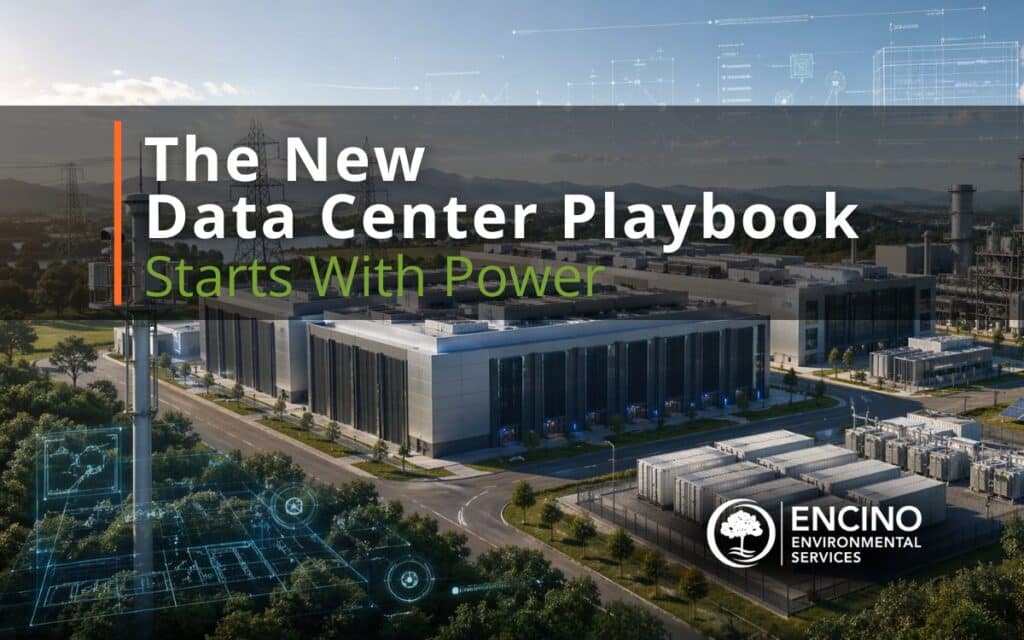
Power Strategy Is Moving to the Center of Data Center Planning
AI is reshaping how large data center projects are planned because electricity demand is growing too quickly to treat power as a downstream utility question. Recent industry analysis shows data center electricity demand continuing to rise rapidly, while supply chain constraints, grid connection delays, and infrastructure bottlenecks are making traditional development paths harder to execute at speed.
That helps explain why developers are increasingly pairing data center expansion with dedicated generation, major transmission investment, or private-grid power models. This is not a side trend. It is becoming part of the development model itself.
Ohio and West Texas Show Two Versions of the Same Shift
The proposed SoftBank-backed project in Ohio is one of the clearest examples. The development calls for 10 GW of data center capacity supported by 10 GW of new power generation, including at least 9.2 GW of natural gas generation, along with major transmission infrastructure upgrades. At that scale, the power strategy is not just supporting the project. It is defining it.
West Texas reflects a different model with a similar conclusion. The GW Ranch project is being developed as a private-grid power campus built for hyperscale data centers and AI infrastructure. The project is designed around natural gas generation, along with solar and battery storage, allowing it to move forward without depending entirely on traditional grid expansion.
These projects are not identical, but they point in the same direction. In one case, the model leans on massive new generation plus transmission investment. In the other, it leans on a private-grid approach designed to bypass traditional bottlenecks. In both cases, power is no longer an afterthought. It is a foundational design decision.
Data Center Permitting and Emissions Planning Are Moving Upstream
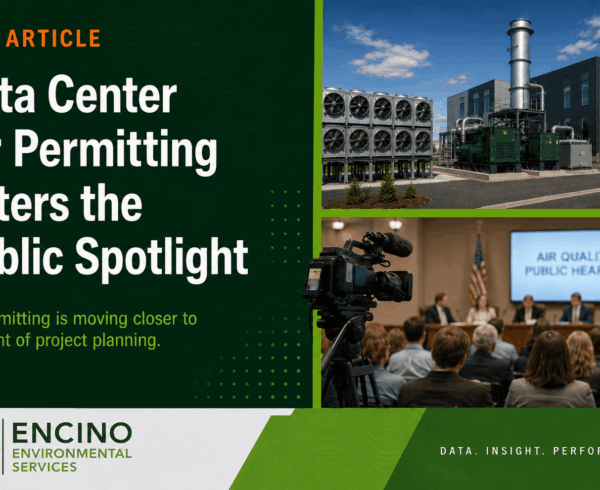
That shift has practical consequences beyond engineering and finance. When a data center project includes large fleets of backup generators, on-site gas generation, or microgrid infrastructure, emissions and permitting strategy move much closer to site selection, project phasing, and startup timelines.
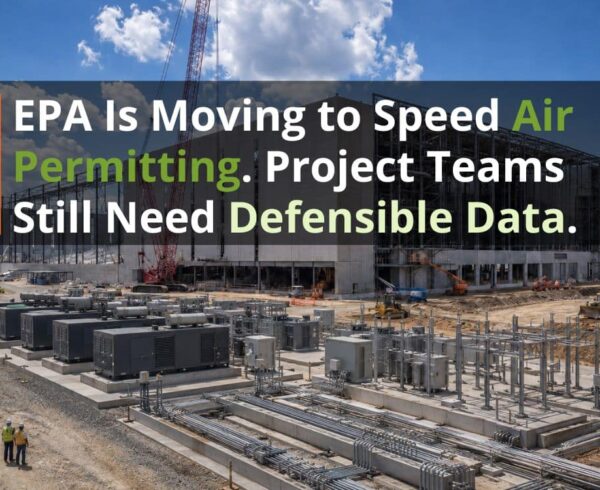
This is not just a compliance issue. It can affect how quickly a facility moves from planning to operation. Federal regulators are already responding to the growing pressure that large data center loads are placing on transmission systems and interconnection planning. At the same time, state and local agencies are likely to face more pressure around permitting decisions tied to large on-site generation assets.
For data center developers, operators, and investors, the takeaway is becoming harder to ignore. Power strategy, air permitting, and emissions performance are increasingly tied together. Projects that rely on backup or dedicated generation need to think early about permit thresholds, testing requirements, monitoring approaches, reporting obligations, and how those requirements may evolve over time.
How Encino Supports Data Center Projects
Encino’s data center support is built around the reality that reliable power and environmental compliance now need to work together. We support data center projects with emissions performance testing, continuous and temporary emissions monitoring, generator emissions strategy, permitting support, and regulatory advisory services designed to help projects move forward with greater confidence.
That support is especially relevant for facilities using diesel or natural gas backup engines, stationary reciprocating engines, turbines, or microgrid-style power systems. These assets can trigger air permitting requirements, periodic emissions testing, and ongoing compliance obligations.
In practical terms, that means early coordination matters. As projects grow larger and power models become more complex, emissions planning can no longer be treated as a late-stage task. It needs to be part of the broader infrastructure conversation from the beginning.
A Bigger Shift Is Taking Shape
The common thread between the Ohio and West Texas stories is straightforward: AI data center growth is pushing power, permitting, and emissions strategy into the core of project planning.
That has implications far beyond utilities and power developers. It affects where data centers get built, how quickly they can come online, what infrastructure must be added, and how operators manage compliance over the long term.
As AI demand continues to expand, the projects that move fastest may be the ones that treat power planning and emissions strategy as part of the same conversation from the beginning.
Sources
- U.S. Department of Energy – Fact Sheet on the Ohio AI/Data Center and Power Infrastructure Project
https://www.energy.gov/articles/fact-sheet-department-energy-ensuring-affordable-energy-access-ohio-while-powering-future - Pacifico Energy – GW Ranch Private-Grid Power Campus Announcement
https://www.pacificoenergy.com/post/pacifico-energy-secures-7-65-gw-power-generation-permit-for-gw-ranch-project - Federal Energy Regulatory Commission – Large Load Interconnection Docket Update
https://www.ferc.gov/news-events/news/ferc-act-large-load-interconnection-docket-june-2026 - International Energy Agency – Data Centre Electricity Use Update
https://www.iea.org/news/data-centre-electricity-use-surged-in-2025-even-with-tightening-bottlenecks-driving-a-scramble-for-solutions - EPRI – Powering Intelligence: Updated U.S. Data Center Scenarios
https://restservice.epri.com/publicattachment/97025