In October 2023, we published our blog article Reducing Methane Emissions in the Oil and Gas Sector: The Super-Emitter Response Program previewing the major components of the Environmental Protection Agency’s (EPA) Super Emitter Response Program included in the agency’s comprehensive update to 40 CFR Part 60 Subpart OOOOb, which focuses on standards of performance for crude oil and natural gas facilities. In this article we cover the final form of the Super-Emitter Response Program that was published in the Federal Register on March 8, 2024.
Purpose of the Super Emitter Response Program
The rationale for the Super Emitter Response Program (SERP) is the EPA’s recognition that the top five percent of emissions sources contribute over 50 percent of total emissions from the Oil & Gas industry, based on the results of several studies, including the 2016 study by Brandt. The agency noted a consensus among peer-reviewed research confirming that only a few sources comprised the very largest emission events, which it termed “super-emitters” and these events are caused primarily by equipment malfunctions or inclement operating conditions.
The EPA defines in this rule that super-emitter events as those having a quantified emission rate of 100 kilogram per hour (kg/hr) of methane or greater. The Super Emitter Response Program establishes a framework for timely notifications of super-emitter emissions data, so they can be quickly and efficiently addressed.
Changes from the Original Proposal
One of the more controversial elements of the Super-Emitter Response Program as it was originally proposed was granting private organizations the authority to independently monitor and report a super-emitter event directly to operators and the EPA. Amid concerns about the Constitutionality of deputizing non-governmental organizations (i.e., environmental activists) in emissions policing, the agency modified its original proposal.
In the final rule, the EPA revised the program to designate itself, rather than third parties, as responsible for notifying operators following the review of third-party notifications regarding super-emitter events at or near oil and gas facilities (e.g., a specific well site, centralized production facility, gas processing plant, or compressor station). This revision mandates that the owner or operator investigate these events and report their findings directly to the EPA.
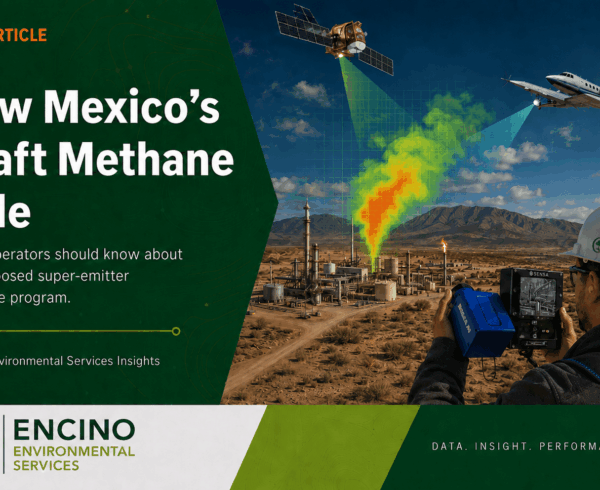
Additionally, the EPA confirmed that third parties certified under the SERP are authorized to use remote sensing technologies such as satellites or aerial surveys, exclusively. They are explicitly prohibited from accessing well sites or other oil and gas facilities. The final rule also prohibits the use of technologies like optical gas imaging (OGI) cameras, which require close proximity to, and/or trespassing on, these facilities.
Third-Party Verification – Who Can Be Certified?
The Super Emitter Response Program is intended to be a civilian driven process, making third-party verification of super-emitter events a critical part of the overall program. A third party can be any EPA-approved independent entity, meaning that the third party does not own or operate the site where a super-emitter is detected.
To gain the authority to make notifications to the EPA, third parties must undergo certification to participate in the program. The certification process includes stringent requirements and obligations to ensure the accuracy and reliability of the data provided. The anticipated EPA review timeline for applications with combined/concurrent technology review and third-party certification will not exceed 270 days. Reviewing an application for third-party certification only (using already approved technologies) is expected to be approximately 60 days. The EPA has established a web page identifying the names and third-party notifier identification numbers for all EPA certified third parties under the SERP.[AE4]
Information Flow of Third-Party Data
As previously noted in this article, certified third parties are not authorized to notify an operator of a super-emitter event directly, but instead must first notify the EPA who in turn will evaluate the notifications for completeness and accuracy to a reasonable degree of certainty. The EPA will notify operators of validated super emitter events and post them to the Super Emitter Program Portal.
To streamline the flow of third-party data, a certification request must be submitted to the Leader of the EPA’s Measurement Technology Group (Mail drop E143-02, 109 T.W. Alexander Drive, P.O. Box 12055, RTP, NC 27711 or via email to johnson.steffan@epa.gov) . This centralized approach helps ensure consistency and transparency in the data collection and reporting process.
What to Do When You Receive Notification of a Super Emitter Event
Super emitter event notifications are made on the Super Emitter Program Portal. If you receive a notification of a super emitter event, operators must investigate the event within five (5) days and provide a report within 15 days.
The operator’s report should include a comprehensive plan for addressing the super-emitter event, detailing the anticipated timeline for resolution. It should also include a thorough review of maintenance activities and all monitoring data from control devices. Additionally, the report must assess any previous fugitive emissions surveys and review data from continuous alternative technology systems. Importantly, the owner/operator is required to conduct screening of the entire facility, including well sites, compressor stations, and centralized production facilities, using methods including OGI, EPA Method 21, or an alternative test method.
Within five days of ending the super-emitter event, the operator must submit a report that includes the date and time the event ceased.
LEARN MORE: Leak Detection and Repair (LDAR) from Encino
Avoiding Super Emitter Events – EmSAT™ Satellite Methane Detection
While the Super Emitter Response Program provides a reactive approach to emissions management, proactive measures can alert you to super-emitter events quickly, potentially before a third-party detects it. This consistent, periodic monitoring of your assets enables you to swiftly respond to EPA notifications, neutralize activist claims, and ultimately keep more natural gas product in the pipeline.
Encino offers EmSAT™, a satellite-based methane detection solution that enables operators to monitor their operations proactively. By detecting and addressing potential super-emitter events before they escalate, EmSAT™ helps operators stay ahead of regulatory requirements and mitigate environmental risks.
LEARN MORE: EmSAT™ Satellite Methane Detection
PRESS RELEASE: Encino Signs The Largest Commercial Contract for Satellite-Based Methane Detection and Successful Launch of Second Methane Satellite.
The Encino Advantage
Encino offers the most comprehensive lineup of environmental performance solutions, services, and expertise for mitigating emissions from Energy operations with a focus on Oil & Gas and Biogas markets. We are a pioneer in emissions monitoring in the Energy sector, providing clients with a complete range of environmental services to help companies comply with regulation requirements and voluntary sustainability objectives.
Our offerings include:
-
- CEMS (Continuous Emissions Monitoring Systems) via artificial intelligence (AI)-enabled Optical Gas Imaging (OGI)
- Satellite Monitoring for Methane and Visual applications via Satlantis micro satellites (EmSat™)
- Emissions performance testing for Engines, Combustors, and Industrial Stacks
- LDAR (Leak Detection and Repair)
- Composite Thief Hatches (Enviromech™) composite thief hatches for a durable, long-term seal of liquid storage tanks
- Advanced environmental data software
- Advisory services
Our solutions help ensure regulatory compliance and ESG strategies and objectives. Encino operates across the U.S. covering all major oil and gas basins and select international markets.
We view ourselves as an oilfield services company, dedicated to helping operators improve their environmental and economic sustainability for providing the world with reliable and affordable energy.
By leveraging innovative solutions like EmSAT™ satellite methane monitoring, operators can not only work towards meeting regulatory requirements but also demonstrate their commitment to environmental performance.
Contact us today for a free consultation and evaluation of how Encino can help you achieve environmental performance that generates economic results.