Two of the country’s most pressing infrastructure challenges are beginning to intersect in West Texas. Oil production in the Permian Basin continues to bring increasing volumes of associated natural gas to the surface. At the same time, data center developers are seeking large amounts of dependable power on schedules that conventional grid expansion may struggle to match.
Key Takeaways:
- Permian marketed natural gas production increased 60 percent from 2021 to 2025, reaching 27.6 billion cubic feet per day as gas production grew faster than crude oil production.
- ERCOT is tracking more than 438,000 megawatts of large-load requests, and nearly 89 percent of that requested capacity is associated with data centers. The request total is not a forecast of projects that will all be built.
- Behind-the-meter generation can give data centers dedicated power while reducing grid dependence and creating new regional demand for natural gas.
- Claims that a project will reduce flaring require project-specific evidence about the fuel source, gas-handling arrangement and conditions the project would relieve.
- Air permitting, emissions controls, testing, monitoring and recordkeeping should be built into the development schedule before equipment and operating assumptions are finalized.

Behind-the-meter power offers a potential point of connection. By locating generation at or near a data center, developers can supply some or all of a facility’s electricity directly and reduce the amount of power drawn from the transmission system. In the Permian, natural gas-fired generation can also create long-term regional demand for abundant gas production.
The commercial logic is clear, and the air compliance path deserves the same level of attention. Behind-the-meter projects are better positioned to move forward when equipment strategy, permitting, emissions controls, testing and operating requirements are planned together.
Two Infrastructure Constraints Are Converging in West Texas
The U.S. Energy Information Administration reported that marketed natural gas production in the Permian increased from 17.2 billion cubic feet per day in 2021 to 27.6 billion cubic feet per day in 2025, a 60 percent increase. Crude oil production grew 39 percent during the same period. EIA linked the faster gas growth to rising gas-to-oil ratios and expects natural gas production growth to continue exceeding crude oil growth as the region matures.
That growth increases the importance of gathering, processing, storage and takeaway capacity. In an April 30 memorandum, the U.S. Environmental Protection Agency acknowledged concerns from operators in the Permian and Williston basins about downstream constraints that can prevent or impede associated gas from reaching the market. EPA described circumstances involving gathering-system pressure, maintenance, production surges and insufficient pipeline capacity. The memorandum also noted that regional gas supply can exceed demand or infrastructure capacity and contribute to negative prices at the Waha Hub.
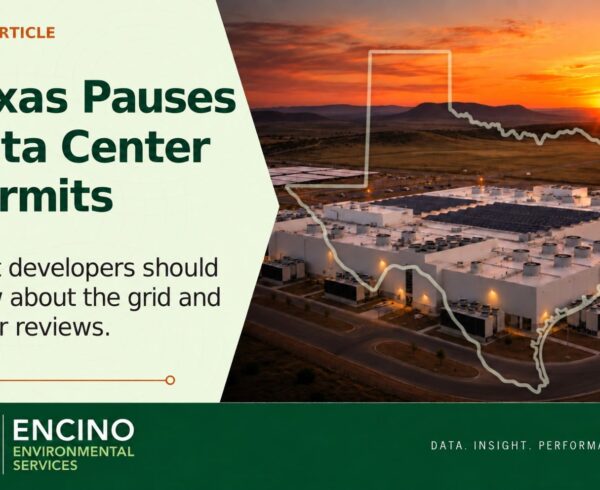
Texas is also managing a historic volume of proposed electricity demand. ERCOT reported in June that it was tracking more than 438,000 megawatts of large-load requests, with data centers representing nearly 89 percent of that requested capacity. ERCOT notes that not every request will become an operating project. The scale still helps explain why developers are evaluating dedicated onsite generation alongside traditional grid service.
What Behind-the-Meter Power Means for a Data Center
Behind-the-meter power generally refers to electricity generated at or near a customer’s site and delivered directly on the customer side of the utility meter. The configuration can vary. A facility may operate independently from the grid, retain a grid connection for supplemental or backup service, or use a phased model that changes as transmission capacity becomes available.
ERCOT’s new Batch Zero framework includes a pathway for large customers that plan to build onsite generation to self-supply some or all of their electricity. ERCOT states that truly islanded facilities with no grid connection would generally fall outside its interconnection process, although Public Utility Commission of Texas registration requirements may still apply.
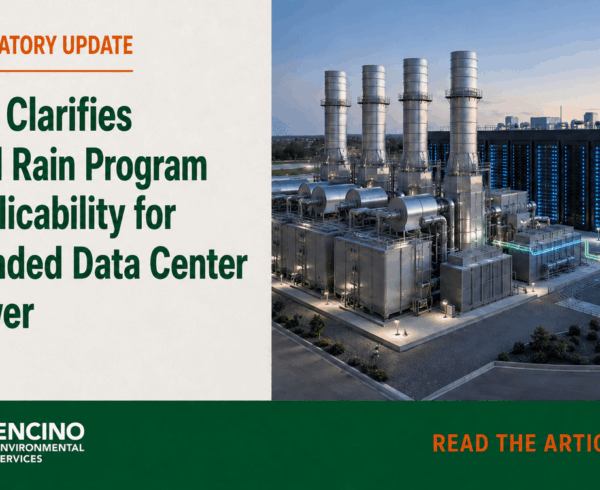
This approach can give a data center greater control over power capacity and timing. It also brings power-generation equipment into the data center development plan. Combustion turbines, reciprocating engines, backup generators, cooling equipment and related sources can change the facility’s emissions inventory, permitting pathway, control requirements and long-term operating obligations. A behind-the-meter electrical configuration does not place the generation equipment outside air permitting or compliance requirements.
Project Kilby Shows the Scale of the Opportunity
On June 22, Chevron announced that its wholly owned subsidiary, Energy Forge One LLC, signed a 20-year power agreement with Microsoft for a co-located natural gas-fired power facility serving a proposed data center campus in Pecos, Texas. Project Kilby is planned to begin delivering power in 2028 and ramp to approximately 2.67 gigawatts. Chevron expects to make a final investment decision by the end of 2026.
The planned project provides a useful example of how natural gas production, power development and digital infrastructure can be coordinated within the same region. It also shows the scale and duration of the commitments behind large data center power strategies.
The available announcement does not establish that Project Kilby will consume gas that otherwise would have been flared. Its relevance to the Permian gas story is the new, long-term regional demand it could create. A credible flaring-reduction claim would require evidence showing which gas stream is used, how it would otherwise have been handled and whether the project actually relieves transportation or processing constraints.
Flaring Compliance Still Applies Upstream
The market opportunity does not change federal requirements for affected oil wells. EPA’s OOOOb rules limit routine flaring of associated gas from new oil wells. For covered wells after the May 7, 2026 phaseout date, associated gas generally must be routed to a gathering or sales pipeline, recovered and used as an onsite fuel source or for another beneficial purpose, or recovered and reinjected into a well. The regulations also identify specific circumstances when temporary flaring may be allowed.
EPA’s April 30 memorandum clarified that 40 CFR 60.5377b(d)(3) allows temporary flaring for up to 30 days per incident when a well already routing recovered gas to a gathering or sales line faces a qualifying downstream interruption outside the operator’s control. Operators using that provision must document the reason, timing and duration of each incident and show that applicable closed vent system, flare or control device requirements were met. The memorandum did not create a broad exception to the routine-flaring requirements.
Behind-the-meter generation may expand beneficial-use and market options over time, depending on how gas is gathered, processed, transported and contracted. Each project must be evaluated on its facts. Proximity alone does not connect an individual well’s compliance pathway to a data center’s fuel supply.
Air Compliance Can Influence Project Viability and Schedule
As Encino discussed in Data Center Air Permitting Enters the Public Spotlight as Onsite Power Use Grows, onsite generation changes a project’s air permitting and emissions-management profile. Project teams should resolve several questions early:
- Will the generation equipment provide primary, supplemental or emergency power, and what operating hours and fuel assumptions support that plan?
- What is the project’s potential to emit, and which state and federal permitting pathways could apply?
- Which emissions controls, operating limits and performance guarantees should be incorporated into equipment specifications?
- Will air dispersion modeling, public notice or additional community engagement be required?
- Which stack tests, engine tests, continuous or temporary monitoring systems, fuel records and operating-hour records will be needed?
- How could ownership, project phases, source boundaries or a future grid connection affect the permitting analysis?
These decisions can affect the schedule well before startup. Where a preconstruction permit is required, construction planning must stay aligned with permit timing. Testing and monitoring requirements also influence commissioning, staffing, data systems and reporting. Defining those requirements before equipment arrives can reduce rushed compliance work and preserve more operating flexibility.
A Shared Planning Challenge Across Critical Infrastructure
Behind-the-meter power brings oil and gas producers, power developers and data center operators into a shared planning process. Each group controls a different part of the project, while the emissions and compliance decisions remain connected. The gas-supply strategy influences upstream handling. Equipment choices determine the power facility’s emissions profile. Data center operating assumptions shape the required capacity, reliability and flexibility.
This intersection fits Encino’s work across critical infrastructure. Encino supports oil and gas operators with emissions monitoring, leak detection and repair, flare and enclosed combustion device testing, and compliance data. We also help data center and power-generation projects with air permitting, stack and engine testing, monitoring, recordkeeping strategy and ongoing compliance support.
Coordinating these requirements across one project timeline helps teams make better decisions about equipment, operating limits and verification before those choices become costly to change. No single project will solve every pipeline, grid or permitting constraint. Behind-the-meter power still creates a new connection between two industries whose infrastructure challenges are increasingly linked.
How Encino Can Help
Encino connects air permitting, field testing, monitoring and compliance data across the emissions lifecycle. For teams evaluating behind-the-meter power, our support can begin with an emissions inventory and permitting strategy and continue through performance testing, monitoring, recordkeeping and operational compliance.
If your project involves Permian gas supply, onsite generation or data center development, talk with Encino early to identify the emissions requirements that could affect design, schedule and long-term operating flexibility.
Sources:
- S. Energy Information Administration: Permian natural gas production increased faster than crude oil, June 18, 2026
- ERCOT: PUCT Approves ERCOT’s Batch Zero Process for Connecting Large Electricity Users While Protecting System Reliability for Texans, June 18, 2026
- Chevron: Chevron Signs 20-Year Power Agreement with Microsoft for West Texas Data Center, June 22, 2026
- S. Environmental Protection Agency: Clarification of Regulatory Provisions Concerning Limits on Flaring Associated Gas for New Oil Wells, April 30, 2026