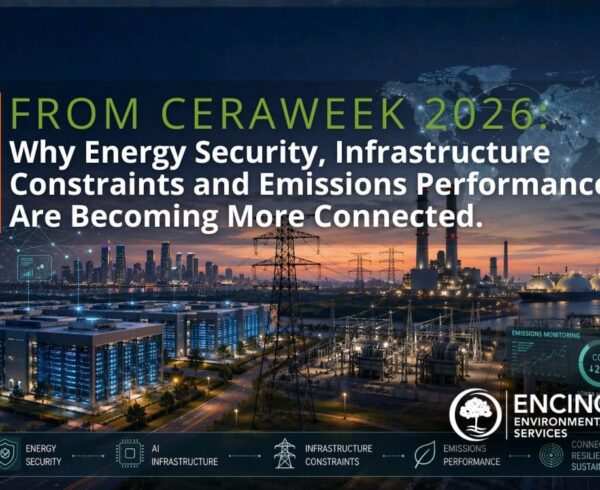
What you need to know.
 As we reported in our previous blog Microgrid Applications and Regulatory Compliance, both the U.S. Energy Information Administration (EIA) and the International Energy Agency (IEA) recently increased their forecast of U.S. electricity demand. Driving the expectation of greater power consumption after a period of relatively flat demand are several factors, including the expectation of strong demand growth in data centers, greater electrification of transportation and heating, an improved economic growth outlook, and greater demand from the industrial sector as American manufacturing ramps up.
Concerns of power reliability and cost certainty combined with long-lead times from utilities, organizations are increasingly turning to self-generation, or microgrids, as the fast track to securing the power they need. These self-contained power systems—capable of running independently or in coordination with the main grid—are gaining momentum in commercial, industrial, and utility sectors.
Why? Microgrids reduce reliance on centralized power, boost reliability, and support sustainability goals, even amid complex permitting and regulatory hurdles.
A major factor for microgrid project success is regulatory compliance, more specifically air permitting. In this article we cover the major federal emissions requirements for natural gas powered gensets commonly used in microgrid applications.
READ MORE: After more than a decade of little change, U.S. electricity consumption is rising again (EIA)
READ MORE: Entering the Age of Electricity (IEA)
The Importance of Air Permitting for Microgrids
Non-compliance can be costly. In May 2025, Elon Musk’s xAI had to remove numerous natural gas turbines from a microgrid powering its Memphis data center due to operating them without permits. The Memphis Chamber of Commerce stated, “The temporary natural gas turbines used for phase one GPUs before grid connection are being demobilized and will be removed over the next two months.”
READ MORE: xAI removes some of controversial gas turbines from Memphis data center
Microgrid Gensets
Microgrid gensets, or generator sets, are a crucial component of microgrid systems, providing a reliable backup power source and often play a key role in providing reliable power. Although renewable energy sources can be part of the microgrid mix of power sources, their intermittent nature makes them unsuitable for baseload or emergency backup power. Diesel gensets are more commonly used for emergency backup systems, while natural gas gensets are more often used for primary power.
Depending on their size and location, microgrids using diesel powered EPSS (Emergency Power Supply Systems) may be subject to certain EPA Tier standards, RICE (Reciprocating Internal Combustion Engine) exhaust treatments to ensure total facility emissions comply with NESHAP (National Emissions Standards for Hazardous Air Pollutants), NSPS (New Source Performance Standards), and NFPA 110 (National Fire Protection Association).
READ MORE: EPA: Understanding the Stationary Engines Rules
Natural gas turbines are also used in EPSS applications, and their emissions are regulated under the New Source Performance Standards (NSPS) for stationary combustion turbines outlined in the Code of Federal Regulations under 40 CFR Part 60 Subparts GG and KKKK.
For the most part, emergency natural gas turbines part of an EPSS are exempt from some emissions requirements (i.e., NOx), however, since the regulations are complex we encourage operators to seek qualified counsel for their specific operation(s).
READ MORE: Stationary Gas and Combustion Turbines: New Source Performance Standards (NSPS)
Air and Environmental Permitting Requirements
Deploying a microgrid—especially one involving combustion-based generation—requires navigating a range of regulatory frameworks, including air quality, zoning, and environmental compliance.
Some of the most common regulatory requirements include:
Air Permits
- Stationary Engines and Turbines must comply with federal standards such as:
- New Source Performance Standards (NSPS) under the Clean Air Act (CAA)
- National Emission Standards for Hazardous Air Pollutants (NESHAP) also under CAA
- State and Local Air Quality Regulations, which may include additional permitting thresholds for nitrogen oxides (NOx), sulfur dioxide (SO₂), carbon monoxide (CO), particulate matter (PM), and greenhouse gas (GHG) emissions.
- Facilities may need to install emission control technologies like SCR (selective catalytic reduction)
Environmental Reviews
- Federal: NEPA (National Environmental Policy Act) reviews may be triggered for projects receiving federal funding or sited on federal land.
- State-specific: As an example, CEQA (California Environmental Quality Act) and other State equivalents can impose additional documentation and mitigation requirements.
Zoning and Noise Regulations
- Local jurisdictions may enforce zoning rules and noise limits, particularly for urban or residential-adjacent projects. Enclosure designs and mufflers are often required to mitigate acoustic impacts.
Fuel Storage
- Systems with onsite diesel or oil storage must comply with Spill Prevention, Control, and Countermeasure (SPCC) regulations and obtain fire safety approvals.
- Diesel storage tanks with are also sources of potential emissions that could potentially increase VOC emissions and require more stringent permit compliance.
Environmental Compliance Solutions for Microgrid Project Success
Encino provides a full range of services and expertise for helping microgrid operators achieve project success by securing necessary environmental permits at every phase – from – and ensuring continuous compliance.
Phase 1: Preconstruction
In the preconstruction phase, focus is on obtaining the required air permit(s) from federal, state, and/or local regulatory authorities. Microgrid projects with combustion sources will likely need to apply for air permits and demonstrate compliance with relevant air quality standards.
The type(s) of air permit(s) required depend in large part on the amount of potential emissions of the microgrid and its location. If located in a non-attainment zone, emissions thresholds for major source New Source Review (NSR) construction permit and Titlte V operating permits can be substantially lower than if located in a general area. Since obtaining a NSR and Title V permits are time consuming and expensive, not to mention stringent ongoing compliance mandates, assessing permit requirements is an essential step in site selection.
Encino Advisory Solutions
Encino helps clients get the most out of their investment in environmental performance solutions while meeting their compliance obligations. No matter what technology you are using, we can help you get the most out of it.
Microgrids using stationary reciprocating or natural gas powered gensets will require air permitting and ongoing emissions compliance. We have the expertise to help you develop a strategy for successful permitting and compliance obligations.
- Permitting and Regulatory Advisory. Experienced advisory for emissions reduction strategy including tools and resources for preparing compliance assessments and permits.
- Data Services and Management. Data services to synthesize multiple data sources into a comprehensive view of your emissions profile from the ground up to space and establish one source of truth for emissions data.
- ESG and GHG Reporting. Reporting for ESG and Compliance needs based on comprehensive, reliable, and verifiable data.
READ MORE: Encino Environmental Advisory Services
Phase 2: Construction and Commissioning
As construction completes and attention turns to commissioning, an initial emissions test must be performed on each engine and turbine in the microgrid.
Enviromech™ Composite Thief Hatch for Liquid Storage Tanks
Fuel storage tanks and backup power systems can be significant sources of fugitive emissions, exposing your facility to potential fines, regulatory actions, and impairment to your corporate reputation. Faulty or worn thief hatches are a common source of storage tank emissions.
The patented Enviromech™ composite thief hatch significantly reduces this key source of liquid storage tank emissions. Enviromech composite thief hatches for liquid storage tanks are engineered with aerospace-grade tolerances and constructed from a durable composite glass-reinforced polyetherimide material, providing corrosion resistance and long-term mechanical integrity performance. These hatches offer a significant improvement in environmental performance and safety over existing technologies.
READ MORE: Enviromech™ Composite Thief Hatch
Emissions Performance Engine Testing
An emissions performance test must be performed on every engine and turbine in your microgrid before it can begin full-scale operations, as well as with periodicity specified in the operating permit (e.g., every 8760 hours of operation). Encino operates advanced mobile emissions performance engine testing laboratories that are compliant with US EPA testing protocols to measure criteria pollutants and speciated GHG compounds, including methane and CO2. Our proprietary systems, managed by highly skilled Encino technicians, deliver near real-time data, expediting diagnosis and enabling the implementation of performance optimization strategies.
- Reliable and comprehensive engine testing.
- Electronic Reporting into EPA’s CEDRI.
- Measure and understand the emissions profile of key assets and infrastructure.
- Can be combined with EmVision™ and EmSAT™ to expand measurement coverage.
- Near real-time data for quick diagnosis and performance optimization.
READ MORE: Emissions Source Testing Across the Energy Value Chain
READ MORE: CEDRI Reporting FAQ
READ MORE: Engine Emissions Testing
Phase 3: Operations
Once your microgrid is operational, there are typically ongoing emissions monitoring and compliance requirements, including recurring engine tests, leak detection and repair (LDAR) inspections, and potentially needs for OGI monitoring of emissions and for security.
Leak Detection and Repair Services (LDAR)
If your microgrid is subject to a major source operating permit (i.e., Title V), then most likely you must perform scheduled leak detection and repair (LDAR) inspections. Encino can help you achieve your Low Carbon Economy (LCE) goals with state-of-the-art LDAR services. Our skilled LDAR crews use class-leading technology, including quantitative optical gas imaging (QOGI) cameras, and are unmatched in their professionalism. Encino LDAR technicians have decades of experience conducting surveys for both compliance and voluntary emissions reduction initiatives.
- OGMP 2.0 (Level 4 and Level 5 “Gold Standard” reporting)
- Meet NSPS OOOOa and OOOOb requirement
- Comply with Method 21 LDAR (OOOOa, VVA, and additional permit conditions)
- Support certified natural gas initiatives.
- Support Voluntary Emissions Reduction (VER) initiatives for Carbon Capture Credits and shelter from Methane Tax regulations and other emissions reduction goals
- Texas 28M Series
- Colorado Reg 7
READ MORE: Leak Detection & Repair Services (LDAR)
Continuous OGI Monitoring
Continuous OGI monitoring can help you quickly identify fugitive emissions from your microgrid facility and provide reliable security monitoring day and night. EmVision™ quantitative optical gas imaging (QOGI) from Encino delivers accurate, actionable, and auditable emissions data providing you with fewer false positive alerts, a true picture of your emissions profile, and round-the-clock reliable surveillance monitoring.
- Visual continuous emissions monitoring at the microgrid facility
- High-definition, multispectral and hyperspectral imaging technology for intelligent, real-time analysis and quantification
- Real-time visual leak detection that you can see
- Accurate quantification of emissions volumes
- Maximize the ROI on LDAR teams
- Fix leaks and mitigate emissions fast
- Achieve environmental performance goals
- Improved security and safety profile
READ MORE: EmVision™ Quantitative Optical Gas Imaging (QOGI) CEMS system
Conclusion
Fast becoming the go-to solution for businesses aiming to take control of their energy supply while also cutting emissions, microgrids built on proven genset technology, blended with renewable energy sources and smart controls, offer reliable power and long-term performance. When supported by early, strategic planning for permitting and compliance, they also provide regulatory peace of mind and real progress toward sustainability goals.
Contact us for a free consultation and evaluation of how Encino can help you ensure a successful microgrid project from start to finish.