Stop Treating Thief Hatches as Disposable.
Saltwater disposal (SWD) wells and water midstream systems carry the heaviest load in the oil and gas value chain. They manage millions of barrels of hot, saline, often sour produced water every day and they’re doing it under growing regulatory and public scrutiny.
Most operators focus on injection pressures, well integrity, and seismicity risk when they think about reliability. But there’s a much smaller, cheaper piece of equipment that can silently undermine safety, emissions performance, and operating cost: the thief hatch on your storage tanks.
In SWD service, tank-top hardware is exposed to some of the harshest conditions in the field. When that hardware is treated as disposable (especially thief hatches) it can turn into a recurring source of leaks, callouts, and risk.
This article looks at why SWD facilities are so hard on tank hatches, and how composite thief hatches can help operators take corrosion and chronic leaks off their worry list.
Why SWD Facilities Are Brutal on Tank Hardware
Compared to a typical production tank battery, SWD and water midstream facilities see:
- Higher throughputs: Continuous, high-volume movement of produced water
- Harsher chemistry: High salinity brines mixed with hydrocarbons, CO₂, and often H₂S
- More cycling: Frequent level changes, pressure swings, and temperature extremes
Hydrogen sulfide (H₂S) in particular is both a safety hazard and a corrosion driver. It is well documented as corrosive to many common metals, and inspectors in Texas have found H₂S leaking from damaged tank hatches where the gas had eaten away at metal and seals.
Layer on dust, UV, and weather, and the tank top becomes a high-stress environment where conventional metal hatches age quickly, especially in continuous saltwater and produced-water service.
Tank-Top Components as Emissions & Safety Hot Spots
Regulatory agencies already recognize thief hatches as a common source of fugitive emissions. The U.S. EPA lists storage tank thief hatches among the components prone to unintentional leaks, and its emission standards treat emissions from a hatch on a controlled storage vessel as fugitive emissions rather than normal venting.
READ MORE: EPA Natural Gas STAR Program – Equipment Leaks
For SWD and water midstream operators, that has real consequences:
- Emissions & odors: Leaking hatches contribute to VOC and methane emissions and can create noticeable odors at and around facilities.
- H₂S exposure: In sour systems, hatch leaks can elevate H₂S concentrations around tanks, increasing risk for operators and contractors working nearby.
- Inspection findings: Regulators inspect commercial disposal wells and related infrastructure regularly. Persistent tank-top leaks can lead to findings and corrective actions. READ MORE: Railroad Commission of Texas+1
In many cases, the hatch itself isn’t being misused, it’s just degrading faster than expected in an environment it wasn’t really designed for.
The Hidden Cost of “Disposable” Thief Hatches
When a thief hatch is treated as a consumable, SWD facilities often see the same pattern:
- Hatches corrode, pit, or scale due to saltwater and acrid water vapor
- Thermal cycling causes bodies and lids to warp or “morph”
- Gaskets harden, crack, or lose elasticity
- Operators start seeing more improper seating, sticking lids, or visible leaks
The response is typically reactive:
- Grinding or cleaning seats more often
- Cranking down bolts and springs in an attempt to force a seal
- Swapping out hatches on a regular basis
Each of those actions carries cost: parts, labor, hot work on the tank roof, and the opportunity cost of crews focused on repeat repairs instead of higher-value work. Meanwhile, every leaking or poorly sealed hatch continues to drive emissions and add noise to LDAR surveys.
On a single tank, that might be manageable. Across a network of SWD facilities, it can quietly become a meaningful line item in LOE.
Composite Thief Hatches: Designed for Produced Water and Saltwater Service
Instead of repeatedly replacing metal hatches in an environment that destroys metal, a different approach is emerging: composite thief hatches engineered specifically to withstand saltwater and produced-water conditions.
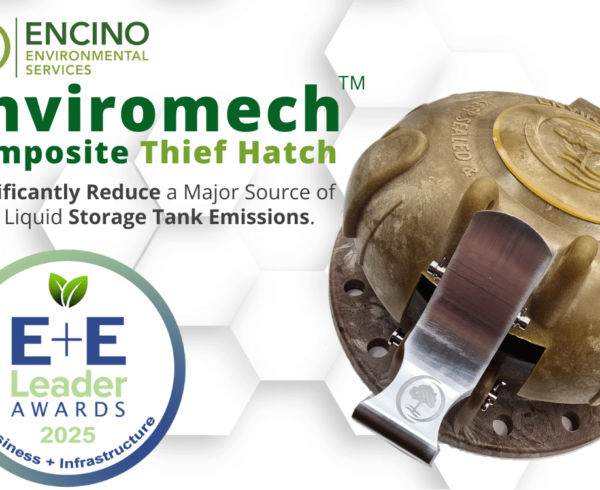
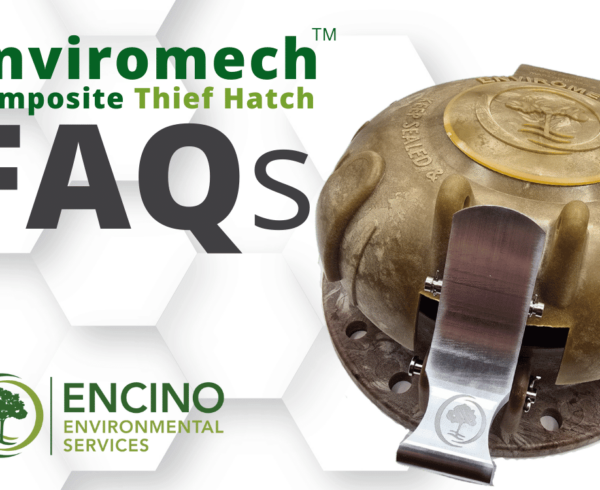
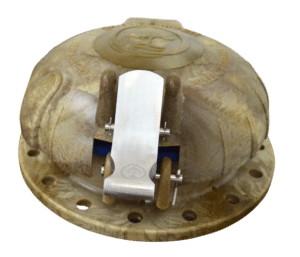 The Enviromech™ Composite Thief Hatch is built from a durable, composite material and has been field tested across multiple basins over several years. It is designed to be more resistant to corrosive degradation from salt water, hydrocarbons, and produced water, and less prone to warping under extreme temperature swings than conventional metal designs. LEARN MORE: Enviromech™ Composite Thief Hatch
What that means in practice for SWD and water midstream facilities:
- Corrosion resistance where it matters most
The composite body and lid are engineered to stand up to acrid water vapor and corrosive gases, helping protect the sealing surfaces that keep vapor in the tank instead of in the atmosphere. - Better long-term sealing
By resisting warping and distortion from temperature cycling, composite hatches are designed to maintain consistent contact with the gasket over time, supporting a tighter, more reliable seal. - Lower maintenance burden
When hatches aren’t constantly corroding or losing shape, there’s less need for grinding, re-torquing, and premature replacements. Crews can spend more time maintaining high-value equipment instead of repeating the same repair on the tank roof. - Improved emissions and safety performance
By reducing one of the most common sources of fugitive tank emissions, composite hatches support both regulatory compliance and ESG goals around methane, VOCs, and H₂S management. LEARN MORE: Closing Down Tank Battery Emissions – Is Your Thief Hatch Stealing Value
What This Means for SWD and Water Midstream Stakeholders
Different roles inside disposal and water midstream companies feel these benefits in different ways:
Facility and Project Engineers
- A drop-in way to upgrade tank integrity in new build or retrofit projects
- A specification change that targets a known emissions and reliability risk
- Better alignment with current and emerging environmental standards
Operations Managers and Site Supervisors
- Fewer nuisance issues with sticking or leaking hatches
- Fewer odor complaints and “come look at this hatch” interruptions
- Greater confidence that tank roofs are doing their job while throughput stays high
Maintenance and Reliability Teams
- Reduced frequency of hatch-related work orders
- Less hot work and fewer trips up and down tank stairs
- Standardization on a design that holds up better in saltwater service
EHS and Compliance
- Fewer LDAR tags tied to tank hatches and other roof penetrations
- A stronger story for regulators and stakeholders about emissions management from storage tanks
- Practical support for company-wide safety and emissions-reduction objectives
How to Pilot Composite Hatches in SWD Service
You don’t have to convert an entire network to see whether composite hatches make a difference. A small, targeted pilot can provide useful data in a matter of months.
Here’s a simple three-step approach:
- Identify your “problem” sites
- SWDs or water midstream facilities with chronic hatch issues, repeat LDAR tags, or frequent tank-top maintenance
- Sites handling the most corrosive produced water
- Install composite hatches on a subset of tanks
- Start with a few tanks at one or two facilities
- Keep the rest of the site as-is to provide a meaningful comparison
- Track a small set of practical KPIs
- Number of hatch-related work orders and site visits
- LDAR findings tied to thief hatches
- Any changes in complaints, odors, or safety observations near the tank farm
Over time, those data points can help build a case for broader standardization or reveal where composite hatches deliver the strongest value in your system.
Closing the Gap Between Subsurface Integrity and Tank-Top Reality
Texas regulators are tightening expectations around disposal well permitting, produced-water migration, and the integrity of injection operations. Operators are investing heavily in data, modeling, and subsurface analysis to ensure they’re managing that risk.
READ MORE: RRC Issues Enhanced Guidelines For Permian Basin Disposal Wells
The tank top shouldn’t be the weak link in that chain.
By replacing easily corroded, frequently replaced metal hatches with composite designs built for saltwater and produced-water service, SWD and water midstream operators can pull a surprising amount of cost, emissions, and risk out of the system – one hatch at a time.
If your disposal or water midstream facilities are battling persistent tank-top corrosion, it may be time to look up and ask: Are thief hatches still disposable parts in your integrity plan or strategic components you’ve brought up to modern standards?
Ready to explore composite thief hatches for your SWD or water midstream network? Contact us to review your tank-top hardware and identify where a composite upgrade can make the biggest impact.