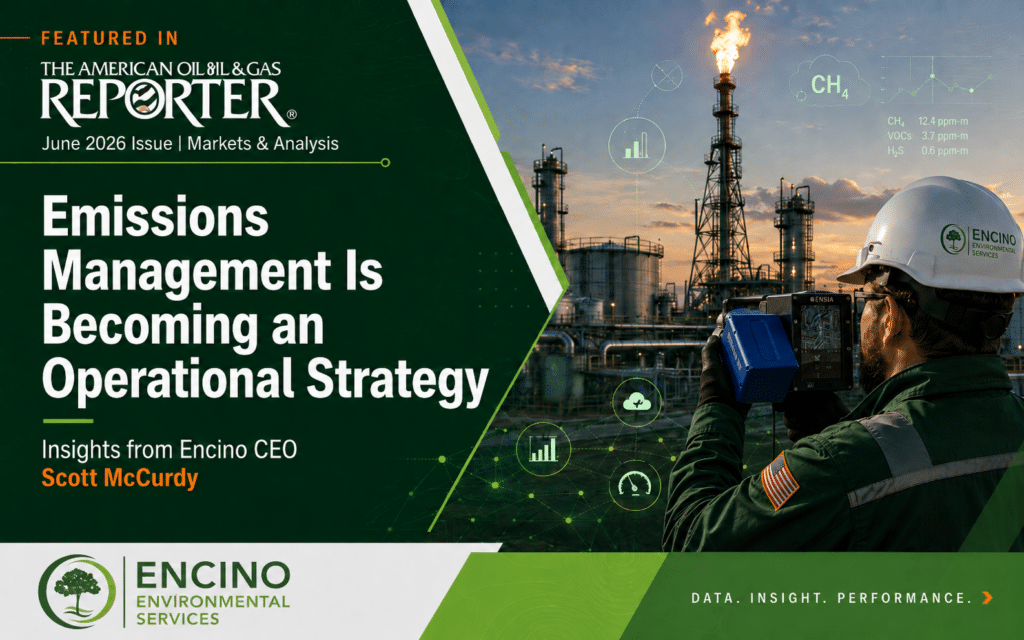
Encino CEO Scott McCurdy recently shared perspective with The American Oil & Gas Reporter on how emissions programs are evolving from compliance-driven efforts into practical tools for improving performance, reliability, and profitability.
Emissions management continues to evolve across the oil and gas industry. While regulatory requirements and methane reduction commitments remain important drivers, many operators are looking beyond compliance alone. The larger opportunity is using better emissions visibility to understand what is happening in the field, identify operational issues faster, and make more informed decisions that can improve performance.
That shift was the focus of a recent article in the June 2026 issue of The American Oil & Gas Reporter, “Emissions Strategies Evolve From Simple Compliance To Industry Profit Centers,” by Andrew Linnabary. Encino Environmental Services CEO Scott McCurdy was interviewed for the article and shared insight on how emissions technologies are helping operators move from traditional leak detection toward a more layered, data-driven approach.
As McCurdy explained in the article, emissions are often a symptom of a larger operational issue. When equipment is not operating properly, the result may show up as an emissions event, but the root cause may also be affecting production, reliability, or revenue.
This is an important point for operators. A strong emissions management program does more than identify leaks. It can help teams understand why emissions events are happening, how quickly they need to be addressed, and where operational changes may reduce future risk.
From find and fix to predict and prevent
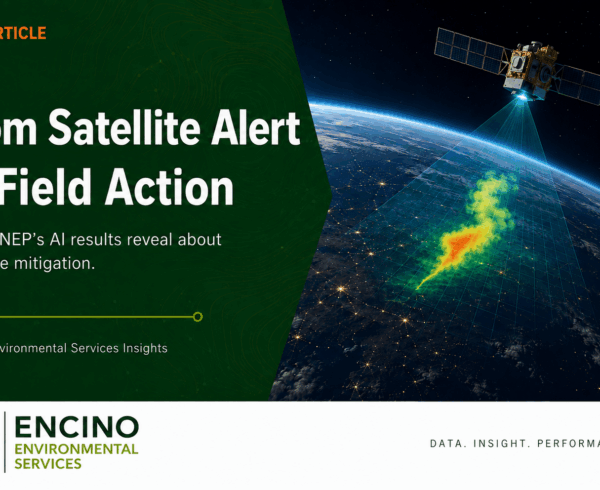
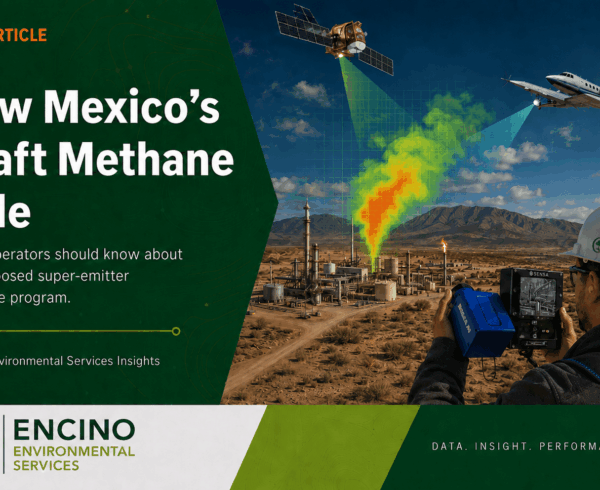
Traditional LDAR programs remain an important part of emissions management, but operators now have access to a broader set of tools. Satellites, aircraft, drones, laser sensors, fixed cameras, optical gas imaging, and continuous monitoring systems can each provide different types of visibility.
The value comes from understanding how these tools work together.
A quarterly LDAR survey may provide required on-the-ground inspection. A satellite campaign may help identify larger emissions events across a broader asset base. A fixed camera or continuous monitoring system may provide more frequent visibility at a priority facility. Each method has strengths and limitations, which is why many operators are moving toward layered monitoring programs.
This approach allows operators to combine multiple technologies based on site risk, asset type, operational needs, and compliance obligations. Instead of relying on a single method, teams can build a more complete picture of emissions performance across their facilities.
The industry is also making progress in emissions quantification. While no technology is perfect, improved quantification helps operators prioritize repairs, estimate the magnitude of emissions events, and better understand where to focus resources.
Over time, better data can also support a shift from reactive response to predictive prevention. When operators understand where emissions have occurred, what caused them, and how often similar conditions appear, they are better positioned to prevent future events before they disrupt operations.
Better emissions visibility supports better decisions
For Encino, this is where emissions management connects directly to operational strategy.
Compliance will always be part of the conversation, but the same data that supports regulatory reporting can also support better operational decision-making. Stronger visibility can help operators identify equipment issues, reduce product loss, improve maintenance planning, and respond faster when conditions change.
That is especially important as regulatory expectations, customer expectations, and internal performance goals continue to evolve. Operators are being asked to understand their emissions profile with more accuracy and more confidence. At the same time, they must keep assets running safely, efficiently, and profitably.
A practical emissions strategy should support both.
Encino works with operators to build that visibility through engine/stack testing, LDAR services, SENSIA OGI handheld and fixed cameras, satellite methane detection, flare and combustion performance evaluation, and regulatory advisory support. Our role is to help customers understand what is happening in the field, connect the data to operational realities, and support decisions that move the business forward.
As emissions technologies continue to improve, the opportunity for operators is clear: stronger data can support stronger operations.

Read the full article on AOGR.com
Scott McCurdy’s comments are featured in the June 2026 issue of The American Oil & Gas Reporter in the article, “Emissions Strategies Evolve From Simple Compliance To Industry Profit Centers,” by Andrew Linnabary.