Frequently Asked Questions About EmVision™ Mobile Emissions Monitoring
Some emissions questions require more than a scheduled survey, while the duration or location does not justify a permanent installation. EmVision™ Mobile brings continuous optical methane detection and quantification to the site for a defined campaign, investigation or operating period, then moves to the next priority location.
The following answers explain how Encino’s patented EmVision™ mobile QOGI continuous optical remote sensing capability works and when it may be the right monitoring approach.
What is EmVision™ Mobile?
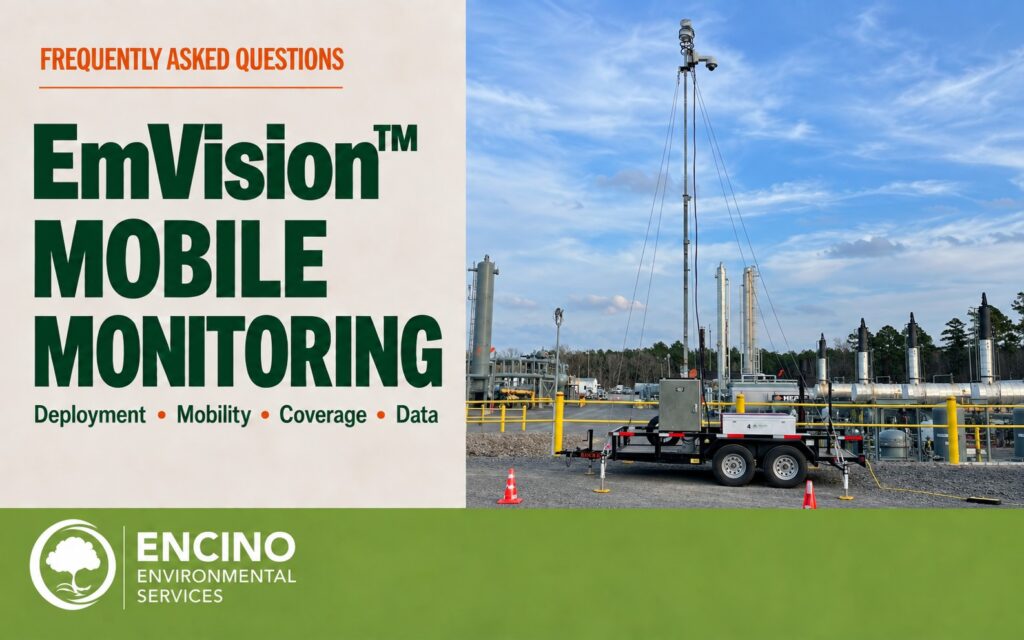
Answer: EmVision™ Mobile is a relocatable continuous optical emissions monitoring system that combines SENSIA QOGI cameras, RedLook technology, automated analytics, alerts and data capture on a mobile platform. Extendable masts position the cameras to observe selected equipment or facility areas without building a permanent camera structure for every deployment.
The system gives operators a time-stamped visual record of detected hydrocarbon plumes and quantified emissions information. Encino can deploy it as a monitoring service, and equipment options may also be available based on project needs.
What camera technology is used in EmVision™ Mobile?
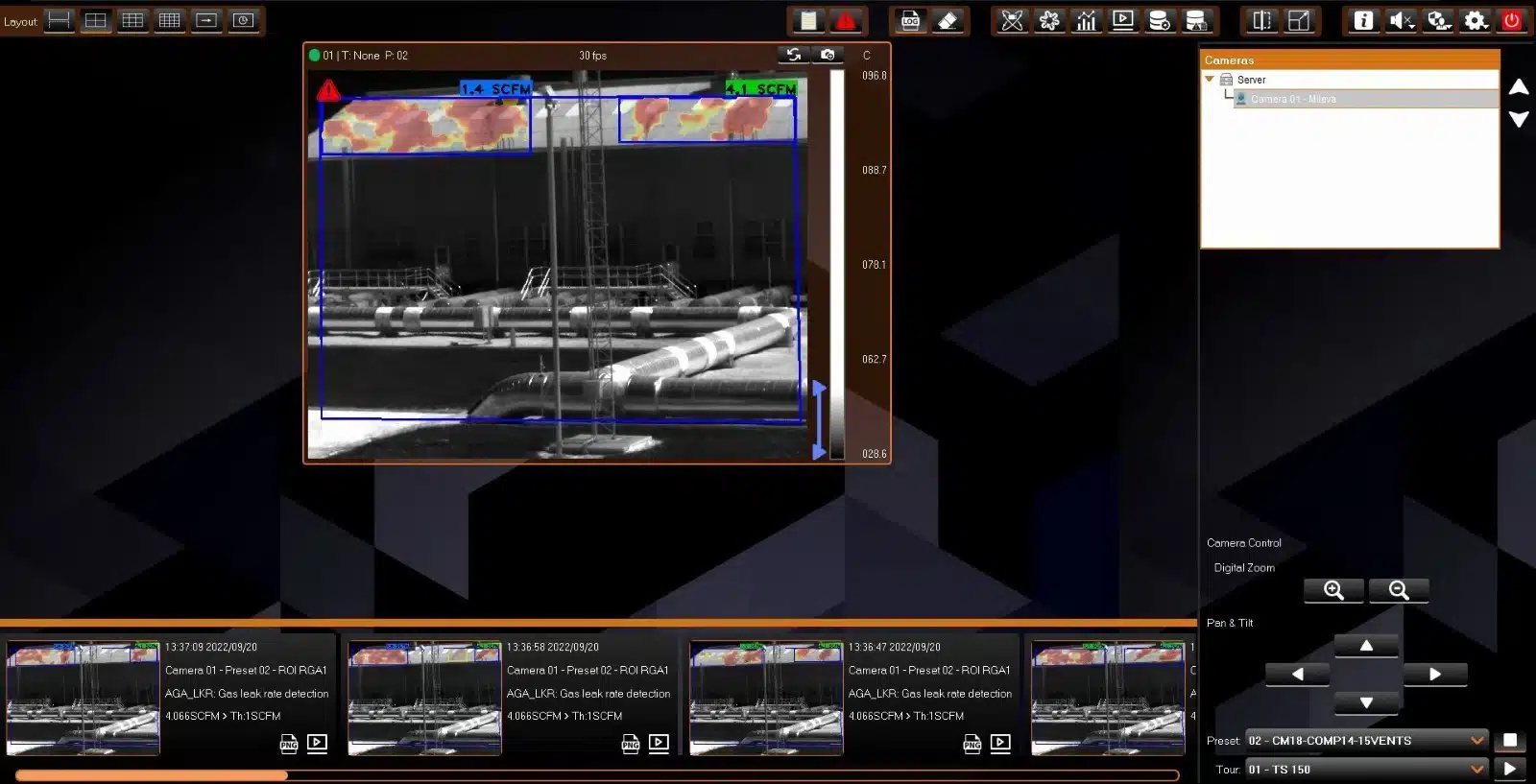
Answer: EmVision™ Mobile uses SENSIA QOGI cameras with RedLook technology on a relocatable platform. The cameras detect and visualize methane and other detectable hydrocarbon plumes, while QOGI analytics estimate emission rates for valid events.
RedLook analyzes the infrared imagery, processes qualifying events and supports automated alerts, time-stamped visual records and emissions data. This combination allows the mobile system to provide continuous optical monitoring at a selected location during the deployment period.
How is EmVision™ Mobile different from fixed EmVision™ monitoring?
Answer: The core optical monitoring capabilities are similar. The difference is deployment strategy. Fixed EmVision™ cameras are installed for sustained monitoring of a defined area. EmVision™ Mobile can be transported and repositioned among facilities or monitoring locations.
Mobility can lower the infrastructure required for a short-term project and allow one monitoring resource to serve several sites over time. Fixed cameras remain the stronger choice when uninterrupted long-term coverage is needed at the same asset.
How is EmVision™ Mobile different from a handheld OGI survey?
Answer: A handheld optical gas imaging survey is conducted by a trained operator who moves through a site and inspects components during a defined visit. EmVision™ Mobile stays in position for the monitoring period and observes configured areas continuously, subject to system availability and operating conditions.
The mobile system can capture intermittent events that occur outside a scheduled survey window and create time-stamped visual records. Handheld inspections remain valuable for close component-level examination, regulatory surveys and follow-up investigation. The two approaches can work together.
When should a facility consider mobile continuous methane monitoring?
Answer: Mobile monitoring is useful when the emissions risk, project schedule or site priority changes over time. Common applications include:
- Investigating an intermittent or difficult-to-reproduce emissions event
- Monitoring drilling, completions, commissioning, startup or maintenance activities
- Evaluating emissions before and after an operational change or repair
- Providing temporary coverage while fixed equipment is planned, installed or serviced
- Comparing performance across multiple facilities
- Supporting a focused methane reduction or measurement campaign
- Gathering information to evaluate where a fixed system would provide the most value
The campaign should begin with a defined objective, target area, monitoring period, response process and data deliverable.
How quickly can EmVision™ Mobile be deployed?
Answer: Deployment time depends on site access, safety requirements, camera placement, power and connectivity, hazardous-area classification and the scope of monitoring. The mobile platform and extendable mast are designed to reduce field setup compared with constructing a permanent mounting structure.
A pre-deployment site review helps Encino select a safe position with a useful line of sight. The project team should also confirm access permissions, utility clearance, communications and any site-specific approvals before mobilization.
Does a mobile deployment require a permit?
Answer: The relocatable platform may reduce construction and civil-permitting needs associated with permanent camera infrastructure. It does not remove every possible approval requirement. Site access, landowner restrictions, electrical work, hazardous-location requirements, local rules and facility management-of-change procedures may still apply.
Encino reviews deployment conditions with the client before setup. The facility remains responsible for confirming the permits and approvals that apply to its location and operations.
What equipment can EmVision™ Mobile monitor?
Answer: Camera views can be configured around tanks, thief hatches, separators, compressors, valves, piping, loading areas and other equipment with potential methane or hydrocarbon emissions. The best targets have a clear viewing angle and fall within a practical distance for the expected release size and environmental conditions.
Dense equipment, buildings, vegetation or elevation changes can block the view. The site assessment considers these obstructions along with prevailing wind, likely emission points and safe positioning.
Can one mobile system monitor an entire facility?
Answer: Coverage depends on facility size, layout, equipment density, camera field of view and the monitoring objective. One position may cover several priority assets at a compact site. Larger or more complex facilities may require multiple views, repositioning during the campaign or more than one camera.
Trying to view every component from one location can reduce source clarity. A risk-based coverage plan usually produces more useful information by focusing on the equipment and scenarios that need the closest attention.
What happens when the system detects a plume?
Answer: The system can generate an alert with time-stamped optical imagery, event details and quantified emissions information based on the configured workflow. Designated personnel review the event, determine whether field investigation is needed and document the response.
The client and Encino should agree on alert thresholds, contacts, response times and escalation procedures before monitoring begins. This preparation turns an alert into a consistent operational process and creates a clearer record of what occurred.
Can EmVision™ Mobile quantify methane emissions?
Answer: Yes. The quantitative optical gas imaging system estimates emission rates for valid detected plumes. Quantification performance depends on gas properties, release rate, distance, viewing geometry, wind, temperature contrast, background conditions and plume visibility.
The project plan should state how the quantified data will be used and which quality checks apply. Encino can help clients interpret results and understand the limitations associated with field conditions.
How long should a mobile monitoring campaign last?
Answer: The right duration depends on the question the facility is trying to answer. A focused diagnostic project may last several days. Monitoring an operational phase, comparing multiple sites or looking for an intermittent event may require weeks or a planned rotation schedule.
The campaign should be long enough to capture representative operating conditions. Production cycles, maintenance activities, weather and the expected frequency of the event should inform the schedule.
Can EmVision™ Mobile rotate among multiple sites?
Answer: Yes. Rotation is one of the primary advantages of a mobile platform. A planned route can give several facilities access to continuous optical monitoring during their assigned windows. The approach can support screening, performance comparison or a staged emissions reduction program.
Rotation also creates gaps between monitoring periods at each site. Facilities that require uninterrupted visibility should consider fixed monitoring or a combination of fixed and mobile systems.
What information is included in the monitoring record?
Answer: Depending on the scope and system configuration, records may include infrared imagery or video, date and time, monitored area, event duration, estimated emission rate, meteorological context, system-health information, alerts and investigation notes. Deliverables should be defined before the campaign begins.
Clear naming conventions, data retention rules and responsibility for adding repair or verification information make the final record more useful for environmental, operations and management teams.
Can EmVision™ Mobile be used for regulatory compliance?
Answer: Mobile optical monitoring can provide valuable data for investigations, documentation, measurement programs and operational response. Whether it satisfies a specific regulatory monitoring requirement depends on the rule, permit, approved method, deployment and monitoring plan.
EPA’s OOOOb provisions allow qualifying advanced methane detection technologies and continuous monitoring systems through an alternative test method approval process. A technology’s general capabilities alone do not establish approval for every site or compliance use. Encino can help clients review the current requirements and define an appropriate role for the data.
Can mobile monitoring help verify a repair or operational change?
Answer: Yes. The system can monitor equipment before and after a repair, maintenance activity or process adjustment. The visual and quantitative record may help teams evaluate whether the observed event stopped, decreased or returned under similar operating conditions.
Repair verification should account for wind, temperature contrast, production rate and other variables that can affect plume visibility. A field inspection or another measurement method may also be appropriate depending on the component and program requirements.
Is EmVision™ Mobile more cost-effective than fixed monitoring?
Answer: It can be for temporary projects, changing priorities or programs that rotate monitoring among several facilities. Mobility reduces the need to build permanent infrastructure at every location and allows the asset to be reused.
Cost-effectiveness depends on mobilization distance, monitoring duration, number of sites, required coverage and frequency of return visits. For a high-priority area that needs continuous long-term coverage, a fixed system may provide better value. Encino can compare the deployment approaches against the facility’s objective and operating plan.
What applications are best suited for EmVision™ Mobile emissions monitoring?
- EPA methodology-compliant data for site-specific GHG and OOOOa reporting.
- Prepare for upcoming regulations, including 0000b, 0000c and proposed climate risk reporting requirements being promulgated by the U.S. Securities and Exchange Commission.
- Affirmative defense support for flyovers.
- Real-time, visual monitoring of site conditions to support safety and emissions reductions through engineering or operations (ex: watching dump valves stick open).
- Immediate notification of emissions events with time-stamped records quantifying emissions volumes.
- Compliance with Colorado CDPHE rules for monitoring of drilling and completions activities.
How do I plan an EmVision™ Mobile project with Encino?
Answer: Start with the operational question you need to answer. Identify the site, target equipment, suspected event, desired monitoring period, alert recipients and intended use of the data. Encino can then assess deployment conditions, recommend camera placement and build a monitoring and reporting approach around the project.
Talk with our emissions monitoring team about using EmVision™ Mobile at one facility or across a multi-site program.
Get a Clearer Picture of Your Emissions Profile with EmVision™ Mobile QOGI Monitoring
Encino’s suite of methane leak detection and methane monitoring solutions helps you document environmental performance, identify fugitive emissions and uncover opportunities to retain product or recover value from waste streams.